

Stress and sexual desire are two intertwined concepts in women’s health. Many women experience a decrease in sexual desire or pain during intercourse at some point in their lives. Although there are several physical causes such as infections or endometriosis, research shows that chronic stress is one of the most important factors affecting sexual desire and causing pain during intercourse. In this article from a gynecologist’s perspective, we examine how stress and sexual desire affect each other and what effective strategies exist to break this vicious cycle.
Understanding stress and its effect on women’s bodies
What is stress and what types does it have?
Stress is the body’s natural response to environmental pressures and threats. This response is regulated through the hypothalamic-pituitary-adrenal (HPA) axis and the release of the hormone cortisol. Normally, short-term stress is beneficial, but chronic stress has destructive effects on sexual function. The relationship between stress and sexual desire begins right here: high cortisol directly reduces the production of sex hormones.
Prevalence of stress-related sexual problems
According to a Mayo Clinic report, over 40% of women experience sexual desire disorder, and stress is one of the top three causes. Also, among women who have pain during intercourse, more than half report high levels of daily stress. These statistics show that stress and sexual desire have a direct and inverse relationship.
Mechanism of stress effects on reducing sexual desire
The role of cortisol hormone in suppressing desire
When stress rises, cortisol levels increase. Cortisol acts on the hypothalamus to reduce the production of gonadotropin-releasing hormone (GnRH). As a result, the ovaries produce less estrogen and testosterone. Reduced testosterone directly weakens sexual desire. The National Institutes of Health (NIH) confirms that even daily stressors can lower testosterone levels in women. Therefore, the relationship between stress and sexual desire is a hormonal and biochemical one.
Disruption of the autonomic nervous system
For a pleasurable sexual encounter, the parasympathetic (relaxation) system must be active to increase blood flow to the pelvic area. Chronic stress keeps the sympathetic (fight-or-flight) system constantly active and does not allow the body to enter the relaxation phase. The result: vaginal dryness, reduced sensation of pleasure, and inattention to sexual stimuli. This mechanism shows how stress and sexual desire are linked through the neural pathway.
Effect of stress on psychological disorders
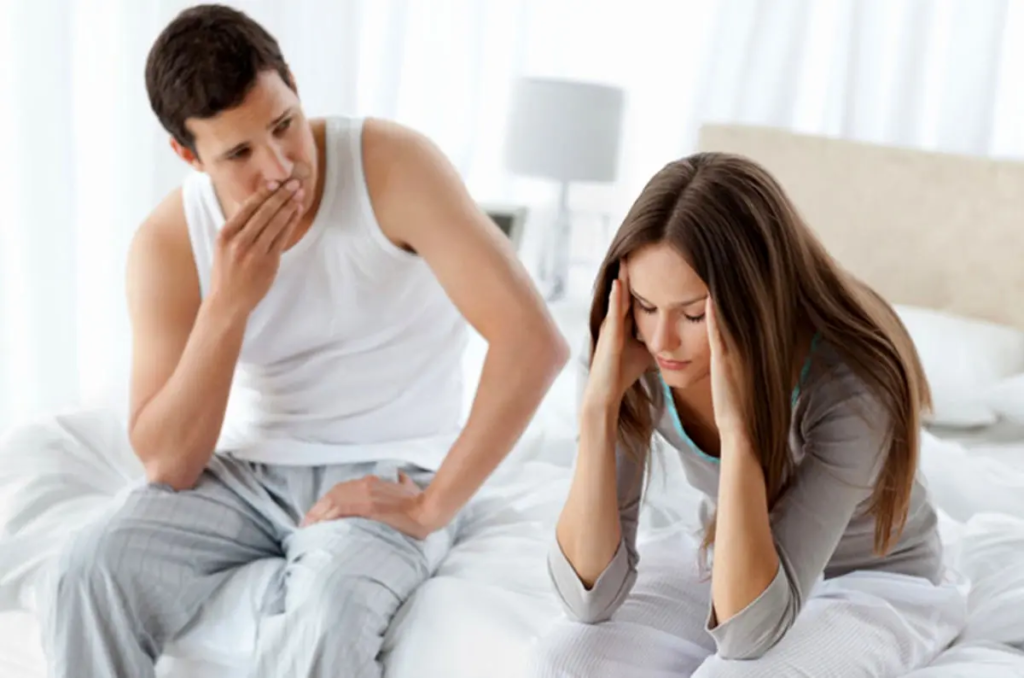
Anxiety and depression, which often accompany chronic stress, independently reduce sexual desire. The U.S. Office on Women’s Health (OWH) emphasizes that uncontrolled stress creates a vicious cycle: stress → reduced desire → dissatisfaction and worry → more stress. In this cycle, stress and sexual desire both play the roles of cause and effect.
How does stress cause or worsen pain during sexual intercourse?
Pain during intercourse (dyspareunia) can have a physical or psycho-muscular origin. Stress plays an exacerbating role in both categories.
Pelvic floor muscle tension (vaginismus)
In response to chronic stress, the pelvic floor muscles unconsciously contract. This condition causes spasm and severe pain upon penetration. Sometimes the woman cannot even insert a tampon. This condition is called vaginismus and is rooted in stress and fear of pain. The connection between stress and sexual desire here manifests through the muscles.
Vaginal dryness due to hormonal imbalance
Stress, by reducing estrogen, decreases the production of natural vaginal lubricant. Intercourse without sufficient lubrication causes friction, burning, and painful micro-tears. After experiencing pain a few times, the brain associates intercourse with threat, and the pain-fear-stress cycle is completed.
Exacerbation of underlying pelvic conditions
If a woman has endometriosis, PCOS, or fibroids, stress increases systemic inflammation and intensifies pain perception. As a result, pain that is mild is felt more severely under stress. Thus, stress and sexual desire also play an important role in organic diseases.
How to determine if stress is the main cause?

The gynecologist performs the following steps for diagnosis:
- Detailed history: time of onset (concurrent with a stressful period?), history of trauma or surgery, relationship quality.
- Pelvic examination: to rule out organic causes such as cysts, infection, vaginismus.
- Hormonal testing: cortisol, testosterone, DHEA-S levels.
- Standardized questionnaires such as the Female Sexual Function Index (FSFI).
If examinations and tests are inconclusive and the individual has high levels of stress, it is highly likely that stress and sexual desire have a direct cause-and-effect relationship. PubMed Central also emphasizes the need to rule out organic causes before diagnosing stress.
Treatment strategies with a stress reduction approach
Complete elimination of stress is not possible, but its effects on sexual desire can be reduced.
Psychotherapy and sex counseling
- Cognitive-behavioral therapy (CBT): restructuring negative thoughts and reducing performance anxiety. Mayo Clinic considers CBT the most effective method for stress-induced disorders.
- Couples therapy: many sexual problems are rooted in poor communication. Learning communication skills reduces psychological burden.
Pelvic floor physiotherapy
Using biofeedback techniques, diaphragmatic breathing, and stretching exercises, the physiotherapist reduces tension in the pelvic floor muscles. This method is highly effective for vaginismus and dyspareunia.
Hormonal management and supplements
- If testosterone deficiency is proven, low-dose testosterone therapy (under medical supervision).
- Adaptogen supplements (ashwagandha, rhodiola) have been shown in some studies to lower cortisol and improve sexual desire.
- Ensure adequacy of vitamin D, magnesium, and zinc.
Lifestyle modification and mindfulness
- Meditation and deep breathing: 10 minutes a day reduces HPA axis activity.
- Adequate sleep: 7-8 hours per night. The World Health Organization (WHO) emphasizes the importance of sleep in stress management.
- Regular exercise: walking, yoga, cycling – reduces cortisol and increases endorphins.
- Reduce caffeine and alcohol.
Use of lubricants and safe sexual techniques
Until stress resolves, use water-based or silicone-based lubricants. Start intercourse with non-penetrative stimulation and massage to activate the parasympathetic system.
When to see a gynecologist?
Be sure to get evaluated if you have any of the following symptoms:
- Pain during intercourse lasts more than 3 months.
- Reduced sexual desire has caused distress and relationship problems.
- You have irregular bleeding or foul-smelling discharge along with pain.
- You have a history of pelvic trauma or surgery.
- You have tried stress reduction methods for 2 months but have not seen improvement.
After ruling out physical causes, the gynecologist will refer you to a sex therapist, pelvic floor physiotherapist, or endocrinologist.
Summary and conclusion
Stress and sexual desire have a deep and bidirectional relationship. Stress, through increasing cortisol, reducing sex hormones, disrupting the autonomic nervous system, and creating muscle tension in the pelvic floor, both reduces desire and worsens pain during intercourse. Fortunately, with a combination of psychotherapy, physiotherapy, lifestyle modification, and if needed hormonal interventions, this vicious cycle can be broken. Timely consultation with a doctor and discussing sexual problems is the first effective step toward recovering a healthy relationship.
Closing words: If you or your spouse have the mentioned symptoms, know that the missing link may very well be stress. With the help of a gynecologist, this link can be undone.

